
Key points
- Most dust gets in through gaps around old windows, not through glass.
- Plasowin sashes overlap the frame by at least 8 mm, sealed with EPDM gaskets and wool pile.
- Fusion-welded corners leave no joints for dust to pass.
- A mosquito net keeps insects out when windows are open.
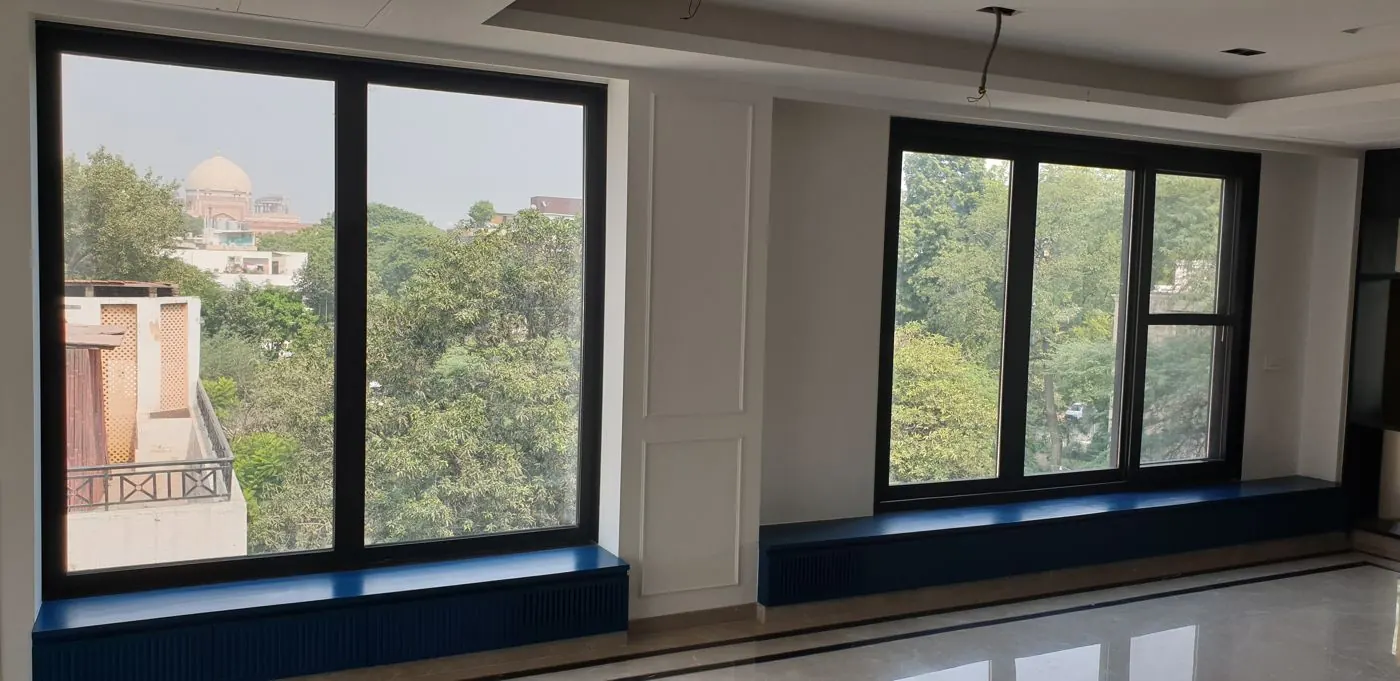
Where dust really comes in
Closed windows still let in dust when the sash only touches the frame, leaving tiny gaps along the edges and corners. During Delhi's pollution season, from October to January, smog seeps through these gaps all day. It matters most for homes with children or elderly parents.
What stops it
- Overlap, not contact. In a Plasowin window the sash overlaps the frame by at least 8 mm, so there is no straight path for air.
- Gaskets all round. Microwave-cured EPDM gaskets around the frame, sash and glass, plus wool pile on sliding sashes, seal every edge.
- Welded corners. Corners are mitred and fusion-welded, so there are no joints to open up over time.
- Drainage caps. Caps on the drainage holes stop dust and insects getting in where rainwater gets out.
- Multi-point locking. Locking the sash at several points presses the gaskets evenly along its whole length.
Sliding or openable?
Both seal well. Openable windows seal tightest because the gaskets are pressed shut by the lock. If dust is your biggest worry, choose openable windows for bedrooms.
When the windows are open
A fine mosquito net keeps insects out while you air the room. Mosquito net options →
Bonus: quieter and cooler
The same seal that keeps dust out also keeps noise and hot air out, cutting noise by 30–35 dB with double glazing and saving 30–35% on cooling. Why uPVC →